
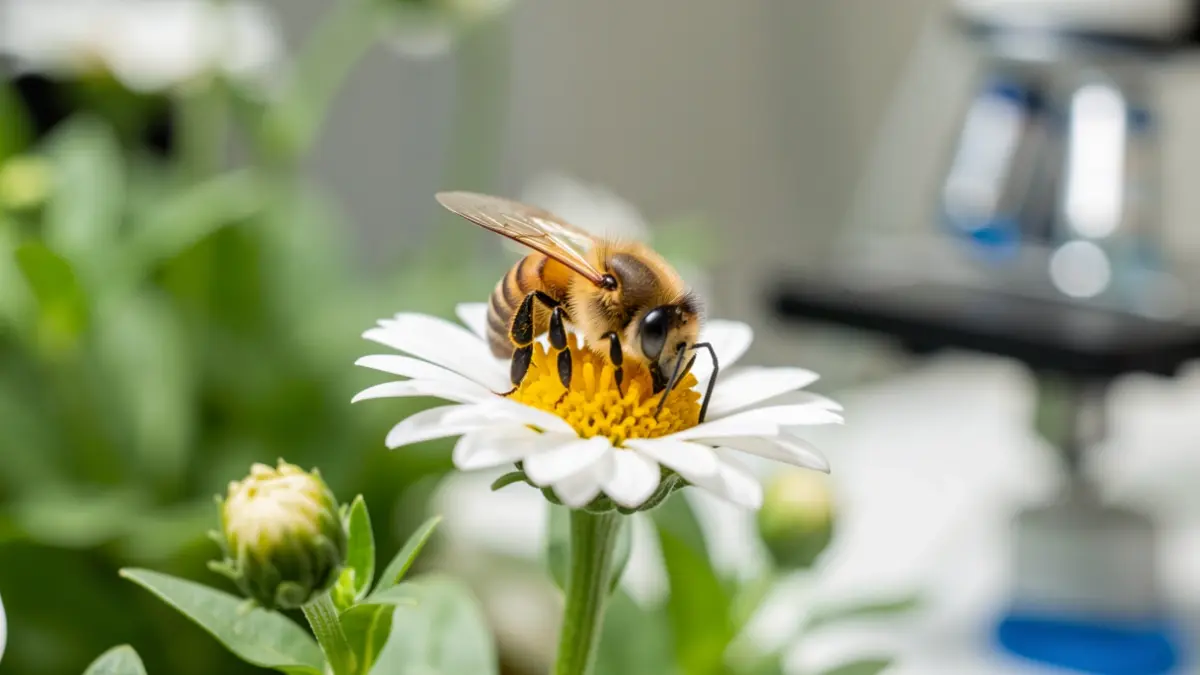
A recent publication, involving the Centre for Applied Research and Management Studies (CERAG - UGA - Grenoble INP-UGA), has transformed the risk of species extinction into a measurable economic cost. This study, applied to the European honeybee in France, reveals that inaction in the face of biodiversity decline incurs growing costs, weakens species, and burdens the economy.
The research proposes a new accounting tool that integrates biodiversity to anticipate the cost of inaction and incorporate the protection of living organisms into economic decisions. This approach combines the recognition of the intrinsic value of species and their specific consideration in biodiversity reports, along with the monetary valuation of natural, human, and societal capital.
Piloted with the European honeybee in France through questionnaires and interviews with 70 beekeepers between 2018 and 2025, the method identifies the resources needed for conservation. For 30 hives experiencing approximately 30% annual losses, the necessary expenses are estimated at €4,700. With 40% losses, this would reach €6,095, reflecting the increased resources required as the species' survival conditions deteriorate.
The findings suggest that accounting can serve as an alert and conservation tool by making visible the resources needed to maintain species and the economic consequences of inaction. This approach helps integrate biodiversity into management tools and international reporting frameworks, opening avenues for application to other species and ecosystems.