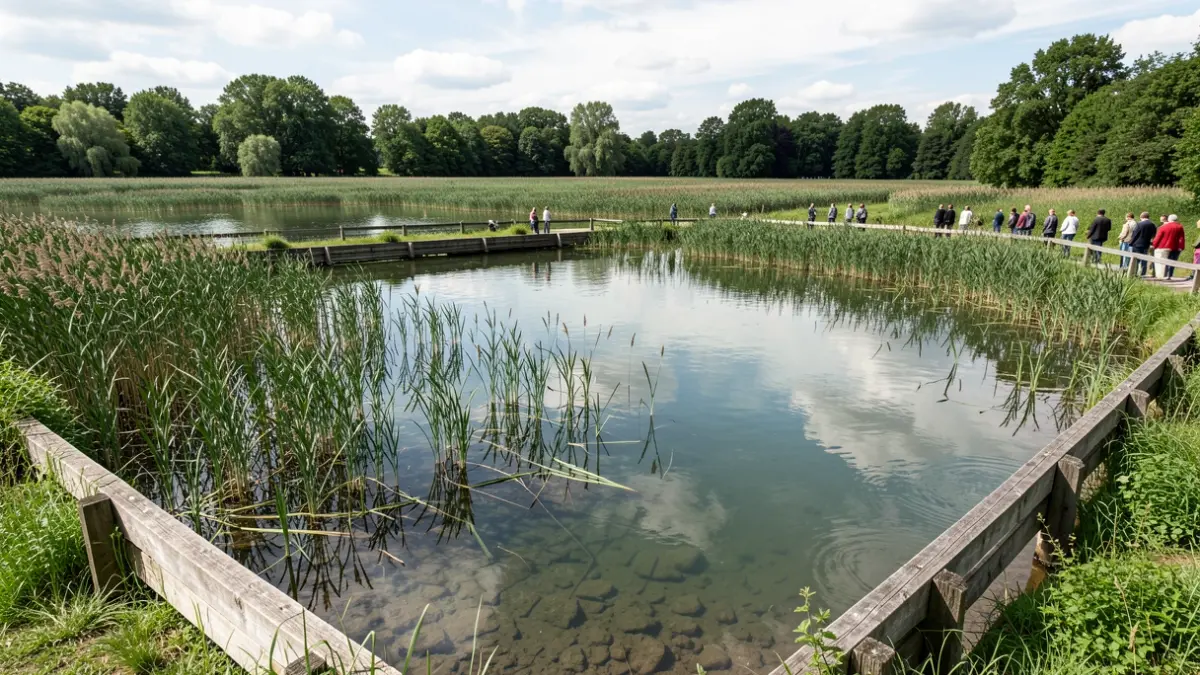
This draining, carried out outside sensitive periods for wildlife, is part of a multi-year action plan aimed at balancing the site's summer use with the protection of this fragile environment. An ecological monitoring by the community of communes' ecologist highlights the presence of adapted species such as the Eurasian coot, dragonflies, the European grass snake (harmless to humans), and amphibians, including the Common toad, a protected species.
In 2024, wooden stakes and barriers were installed around the reed bed to prevent its deterioration. The wetland hosts over 15 different aquatic plant species that promote nesting and reproduction for local fauna, indicating good ecological health that requires constant attention.
Recently, aquatic plants were added to the 'bas-marais' (lower marsh) near the reed bed. These plants act as natural purifiers, limiting algae proliferation and filtering nutrients to reduce eutrophication. In total, over 60 plants of various species, including Jointed rush, Marsh iris, Water mint, sedges, and Bulrush, were planted by the community of communes' agents on October 12th.