
The National Solidarity Compensation (ISN), established in 2023, helps cover part of the losses linked to exceptional climate events. It represents the third level of risk coverage, after farmer's own share (up to 20% loss) and multi-risk climate insurance (between 20% and 30% loss).
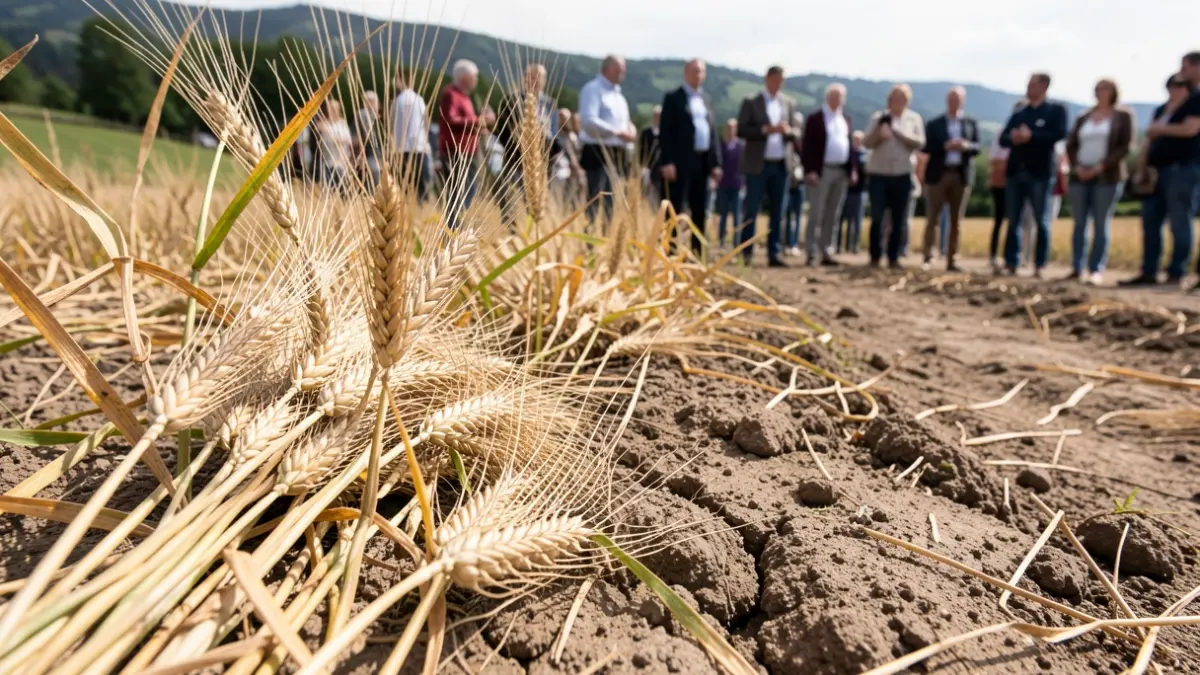
Following the drought and heatwaves of 2026, several agricultural productions in Puy-de-Dôme have been recognized as eligible for the National Solidarity Compensation (ISN) scheme. On October 1, 2026, the competent national commission recognized the entire department for crop losses due to successive excessive temperatures and drought periods.
Affected crops include field crops (sugar beet, fava bean, lentil, grain maize, silage maize, chickpea, protein pea, sunflower, buckwheat, soybean, sorghum, tobacco, consumption potato, and seed potato), numerous vegetables (garlic, eggplant, carrot, celery, cabbage, squash, zucchini, etc.), viticulture, as well as other productions such as aromatic, medicinal, and perfume plants. Crop losses on grasslands are not covered.
To be eligible, crop losses must reach a minimum of 50% for field crops, vegetables, and vines, and 30% for other recognized productions. These losses are assessed against the reference historical yield. Each application will be examined individually.
The application process is exclusively online via the ALEANAT platform. Farmers must have an account on Mon Compte Agriculture and gather proof of production for 2026 and the five preceding years. The Chamber of Agriculture and the EDE of Puy-de-Dôme are authorized to issue the necessary attestations.