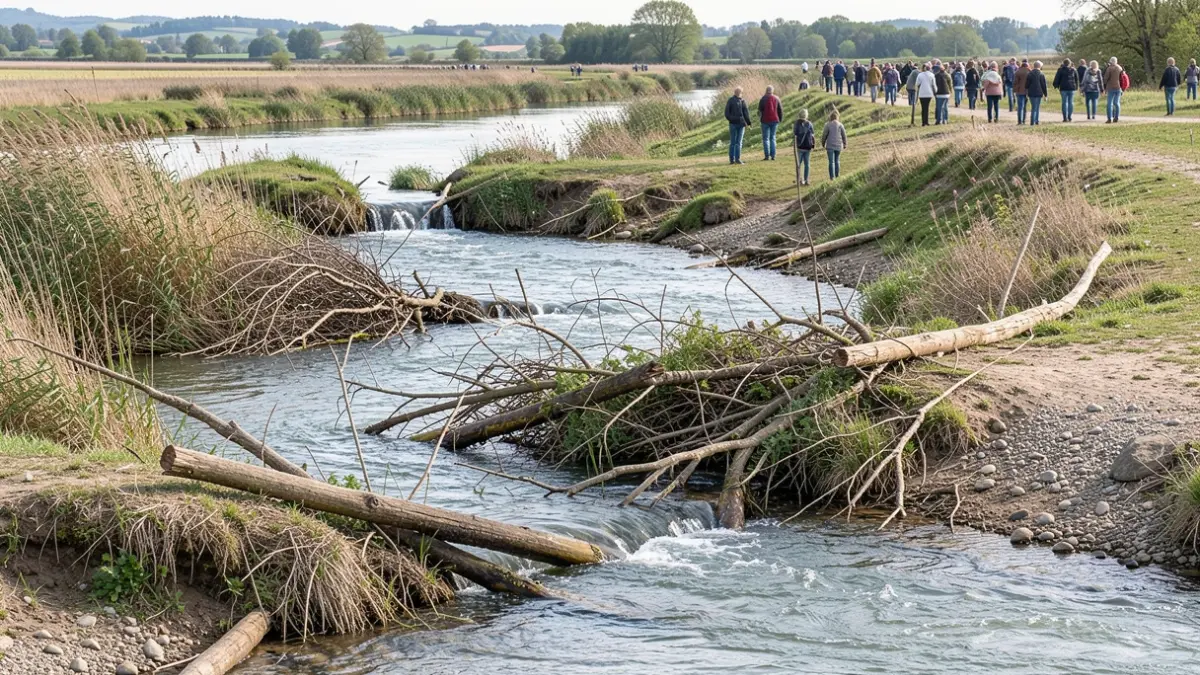
Rather than permanently shaping a watercourse's bed, process-based restoration aims to allow it to evolve naturally. Dead wood, branches, stumps, or structures inspired by beaver dams are used to create roughness, diversify flows, and promote sediment deposition. The benefits include more varied habitats for biodiversity, better-rehydrated soils, and improved water retention capacity, which is particularly valuable during low-flow periods. These techniques favor on-site materials and limit the use of heavy machinery.
This innovative approach, still uncommon, has already been tested on the Pralong river. Over 600 meters, 80 'Low Tech' structures have been installed to restore this highly constrained and degraded watercourse. A new operation is now planned for the Mont stream in Marols, in close collaboration with the Département de la Loire, with construction scheduled for June 2027. The site will also support exchanges within the ASTER cell, which brings together and supports project owners in aquatic environment restoration projects.
This new way of restoring rivers cannot be applied everywhere. In areas with high flood risks, especially near urbanized zones, vegetation and debris management must remain adapted to the protection of people and property. The challenge is therefore to find the right balance: allowing rivers more freedom where possible, to restore soils' natural sponge-like properties and contribute to reducing flood and drought risks.