
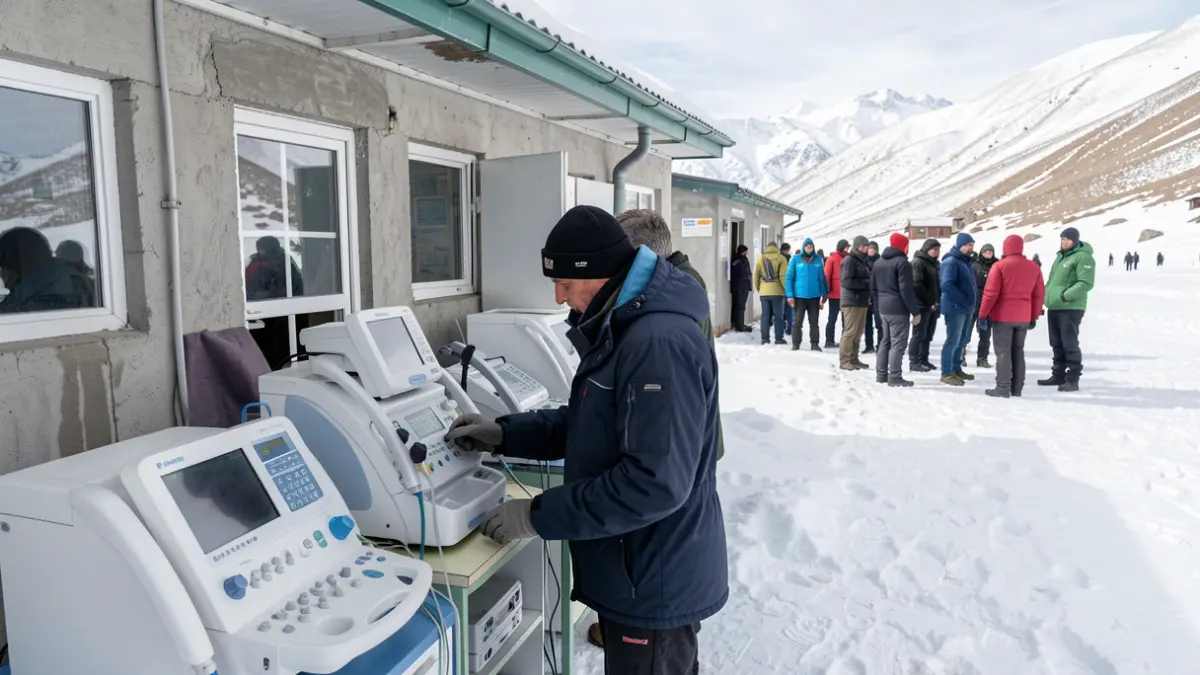
For the first time, research led by the UGA's Laboratory of Hypoxia and Cardiovascular and Respiratory Pathophysiology (HP2) is focusing on the female population of La Rinconada, the world's highest city. Until now, studies conducted by the Grenoble team since 2018 had not included adult women, due to difficulties accessing volunteers and complexities related to hormonal variations.
The scientific hypothesis is that female hormones may offer better protection against chronic mountain sickness, characterized by excessive red blood cell production due to oxygen deficiency. Preliminary observations suggest women are less affected by this syndrome.
The logistical challenge is significant: the team has established a fully equipped human physiology laboratory within a clinic in La Rinconada. Hundreds of kilograms of cutting-edge medical equipment, including ultrasound machines, blood analysis devices, and sleep recorders, were transported from Grenoble. The protocol will compare 120 volunteers, 80 of whom are women, divided into four groups to study the effects of sex and age.
This research, supported by the UGA Foundation, aims not only to improve local health by providing clinical benchmarks for Peruvian healthcare providers but also to advance global public health. The collected data could help better understand the response to hypoxia in patients with chronic respiratory diseases or sleep apnea in France, paving the way for more personalized medicine.