
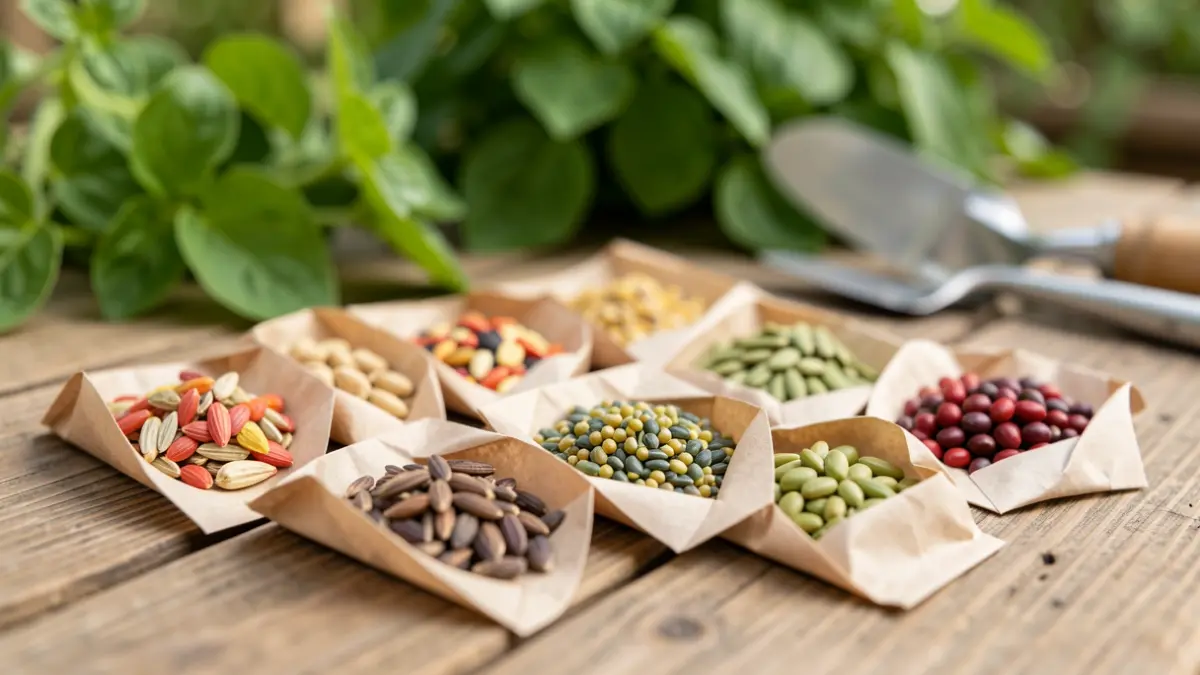
A seed library is a tool that allows for the continuous exchange of flower, fruit, and vegetable seeds, outside the commercial system. Based on the principle of bartering, it invites people to deposit non-commercially sourced seeds and take, in exchange, a packet of seeds offered by another budding gardener. These spaces can be set up in various locations such as libraries, shops, schools, community centers, or collective gardens.
To ensure the system's sustainability, you can take seeds in exchange for your own harvests. These actions do not need to be simultaneous. It is important to note that only seeds harvested by oneself are permitted for exchange in France, thus excluding commercial seeds. All seeds are welcome, but heirloom, hardy, and local varieties are particularly encouraged.
Producing your own seeds, while simpler for some varieties like tomatoes or beans, requires expertise for others such as carrots or beets. Numerous tutorials are available online, and librarians can provide resources. It is essential to properly dry seeds before bagging them, noting the variety, harvest location, and date, along with practical sowing tips.
Seed exchanges provide access to the plant heritage, help disseminate and conserve species, and contribute to the greening of urban spaces. Regional and hardy varieties, better adapted to the local climate, are more resistant and require less watering or fertilizer. They also promote the activity of pollinating insects. For vegetables, this contributes to food autonomy and short supply chains, while rediscovering different flavors. The proliferation of seed libraries thus supports biodiversity and sustainable development.