With a budget of 9 million euros, the PEPR SolsVivants program aims to understand soil interactions to act for their preservation. It will study a diversity of soils, uses, and management methods. The kick-off seminar is scheduled from November 4 to 6.
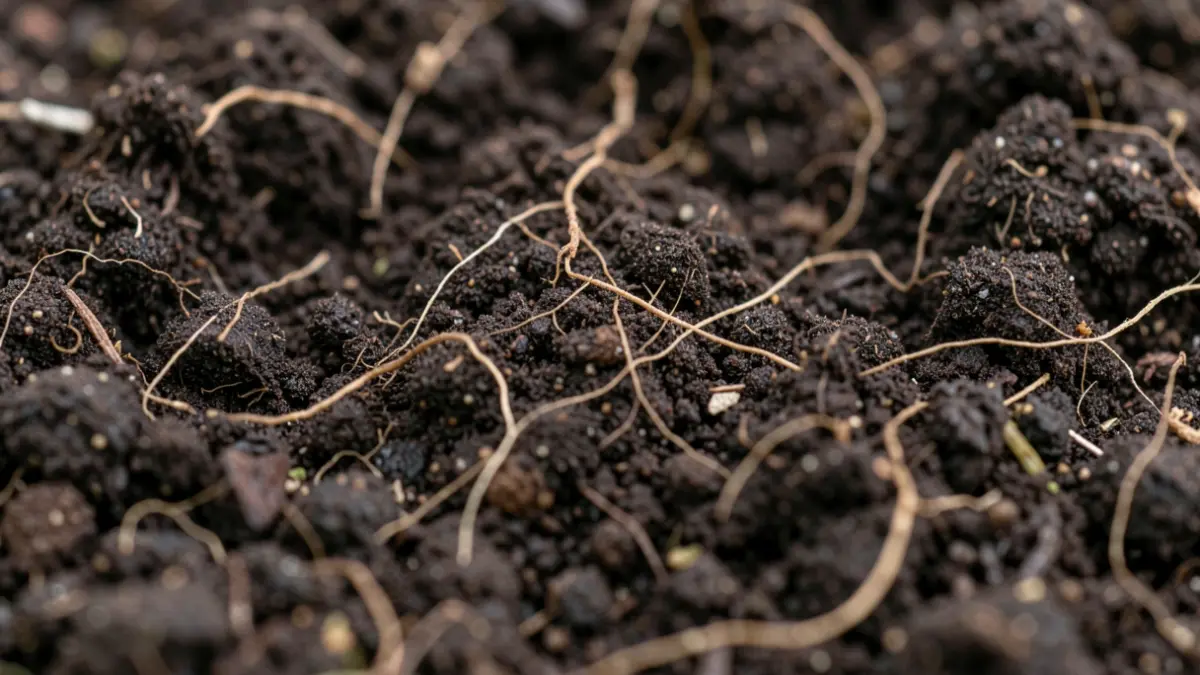
Soils, which host approximately 60% of terrestrial biodiversity and provide nearly 99% of our food, face multiple threats. Over 60% of European soils are degraded by urbanization, erosion, pollution, acidification, salinization, and loss of carbon and biodiversity. These complex and largely unknown ecosystems are the stage for constant interactions between bacteria, fungi, earthworms, and other organisms, which are crucial for key functions such as organic matter decomposition, nutrient recycling, soil structuring, and carbon storage.
This large-scale program, proposed by the Agralife agency, also aims to structure the national scientific community in ecology and soil science. It responds to the European directive on soil monitoring and resilience, which aims for healthy European soils by 2050. Philippe Hinsinger, INRAE research director, emphasizes the importance of providing solid scientific foundations for the debate on measuring this health, particularly concerning soil biodiversity.
PEPR SolsVivants is structured around four major challenges: developing an interaction network approach encompassing all soil organisms, integrating these organisms into soil functioning models, confronting knowledge with the diversity of soils and their uses, and fostering dialogue between disciplines and stakeholders. The program funds two targeted projects studying interaction networks and their role in soil multifunctionality, relying on modeling, experimentation, and observation.
This work will be conducted in 6 major ecosystem types, including mountain grasslands, forests, agroecosystems, urban and industrial soils, as well as tropical ecosystems in West Africa and overseas. The objective is to establish shared protocols, unprecedented multi-organism datasets, and functioning soil models that integrate living organisms, to support public policies and the agroecological transition.
The program, running from 2026 to 2031, involves 16 main partners and 8 associated partners, in collaboration with international partners. It aims to raise awareness among soil managers, citizens, and policymakers about the critical issues concerning soil health.