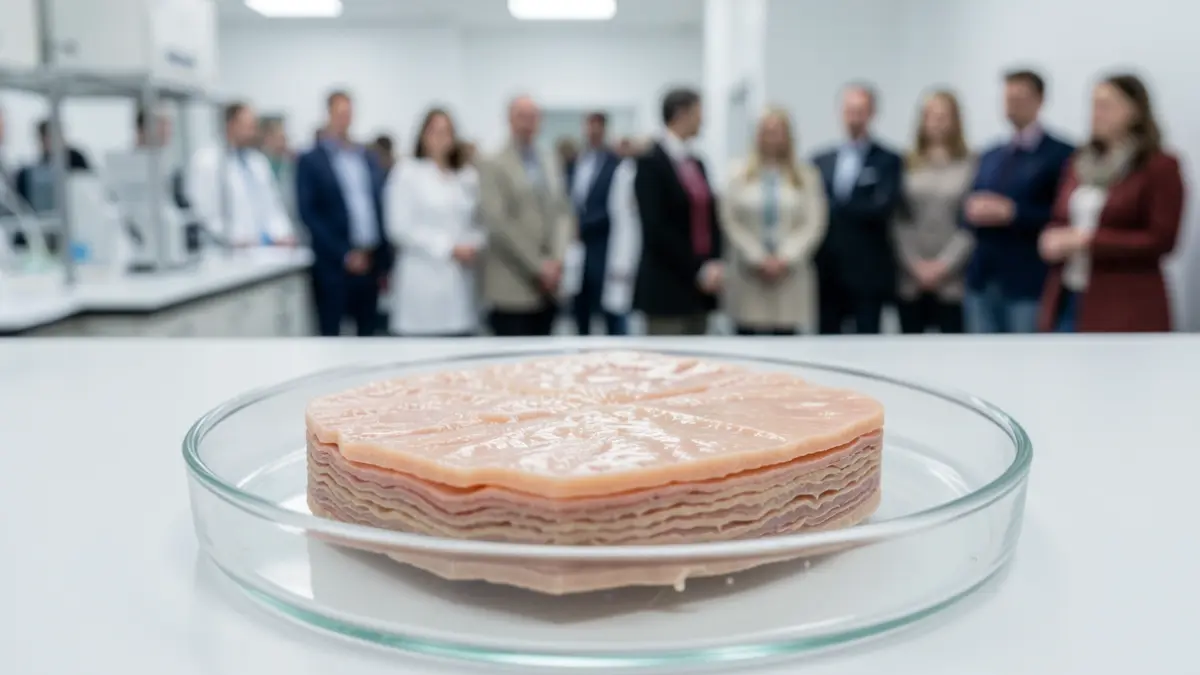
This world first, which will be presented at the CHOOSE France summit on November 23rd, opens the door to clinical trials planned for 2030 and industrial-scale production. Currently, treating severe wounds often requires harvesting healthy skin from the patient, multiple surgical interventions, and prolonged hospital stays. The artificial skin developed by URGO aims to offer an alternative for immediate wound closure without autografting, thereby reducing pain and the duration of care.
The developed artificial skin is the result of three technological feats combined for the first time: the production of living cells in unlimited quantities thanks to URGO's own pharmaceutical-grade cell bank, the assembly of these cells in three dimensions to create functional and resistant skin, and finally its cryopreservation, enabling easier storage and delivery to hospitals worldwide. After thawing, the cells remain viable and functional.
The GENESIS project is a collective achievement of French research and industry, bringing together URGO, the French Blood Establishment (EFS), the CECS - I-Stem laboratory, the CNRS and Lyon 1 University (through the Laboratory of Tissue Biology and Therapeutic Engineering), as well as Dassault Systèmes. This consortium combines expertise in biology, tissue repair, bioproduction, and digital twins. The project benefits from the support of the State, the Region Bourgogne-Franche-Comté, and Dijon Métropole, with a dedicated laboratory inaugurated in 2022.
“"Five years ago, we set ourselves a crazy challenge: to recreate skin. Today, our teams and our partners have achieved this world first. Tomorrow, it offers hope for patients with severe wounds for less burdensome treatments and faster healing. This project perfectly illustrates our URGO mission for patients and caregivers."