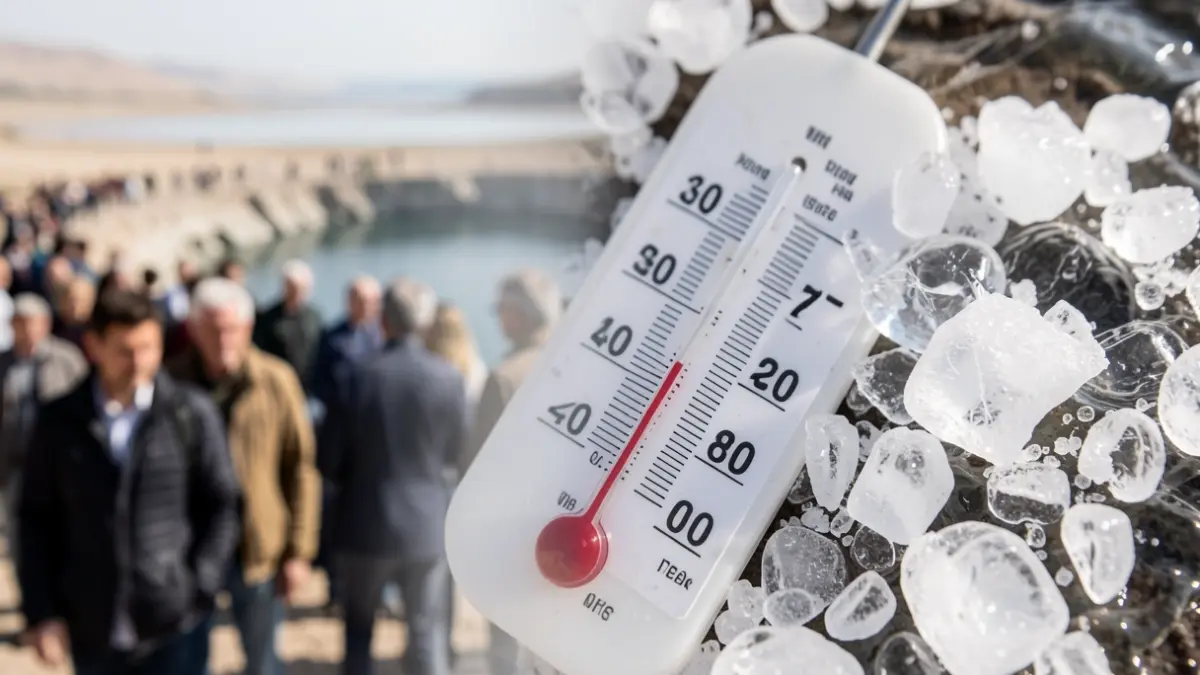
Summers are already particularly hot at the Dead Sea, with average air and surface water temperatures around 34°C. However, a new study, published in Geophysical Research Letters, suggests the situation could become even more extreme due to climate change.
Researchers from the Laboratoire de Géologie de Lyon (LGL-TPE) and the Institut Lumière Matière (iLM), both associated with Lyon 1 University, have developed a detailed model of heat exchange. This model, validated over four decades of temperature data, predicts that a 4°C increase in air temperature in the region by 2100 could lead to an 8°C rise in the Dead Sea's temperature, accompanied by an 85-meter drop in its level.
This phenomenon is explained by a decrease in the efficiency of evaporative cooling. As water abstraction and climate change intensify evaporation, the Dead Sea becomes saltier. However, saltier water is less effective at dissipating heat, creating a vicious cycle where cooling cannot compensate for the heat received.
This mechanism could also offer a new interpretation for the formation of ancient "salt giants," immense salt deposits left by prehistoric seas. The study suggests these formations might indicate not necessarily an extremely arid climate, but the progressive collapse of isolated seas under this intensified warming and evaporation mechanism.