
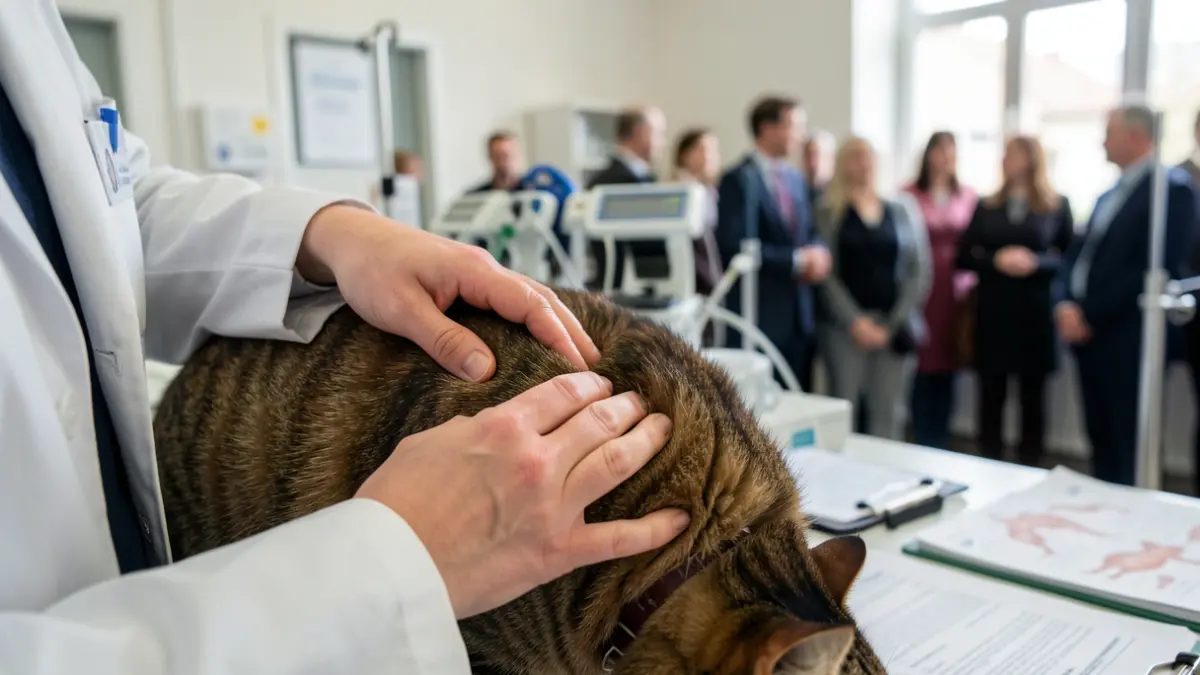
During the congress of the Francophone Society of Tabacology, held in Rennes on September 24 and 25, Laura Barrett, a veterinary oncologist at VetAgro Sup, raised awareness about the effects of passive smoking on animal health. Her presentation was part of a session dedicated to the One Health approach, alongside Emmanuelle Béguinot (National Committee Against Smoking) and Fabrice Vavre (CNRS and VetAgro Sup).
The presentation emphasized that exposure to cigarette smoke is not limited to inhalation. For animals, particularly cats, it can be cutaneous and digestive. Cats may ingest toxic residues deposited on their fur during grooming.
Available scientific data establish a link between this exposure and an increased risk of chronic respiratory diseases, inflammatory pathologies, and cancers in both dogs and cats. Birds are also affected, with reported increases in various disorders, including respiratory and ocular problems, as well as certain cancers.