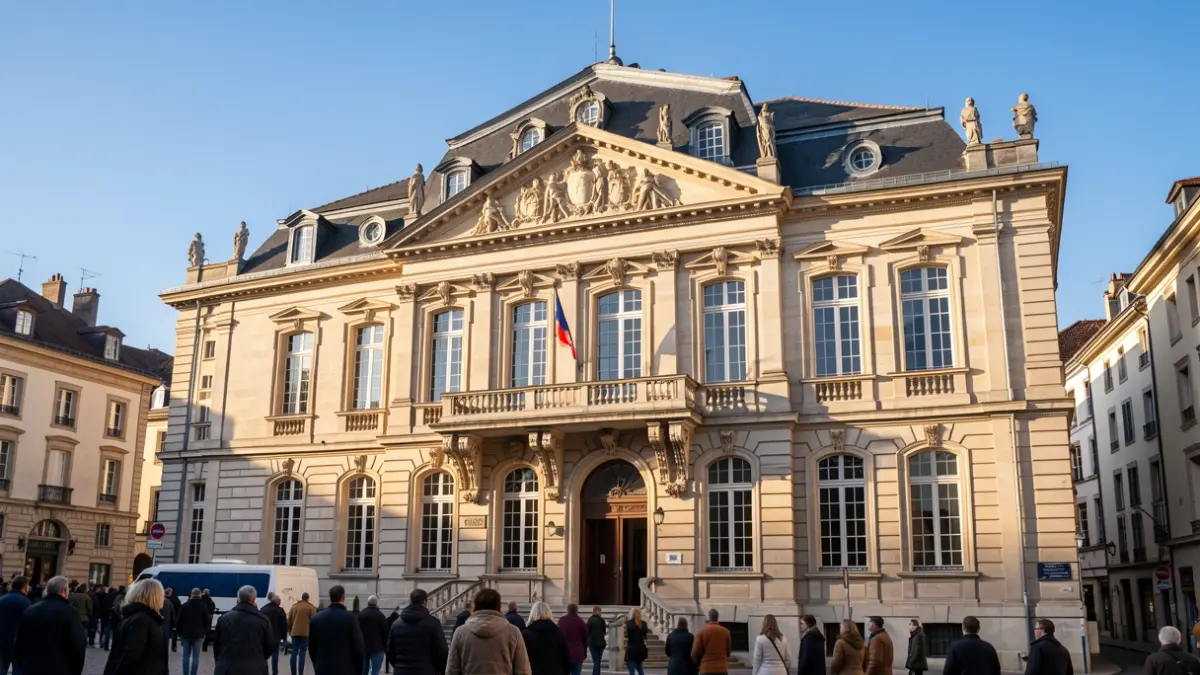
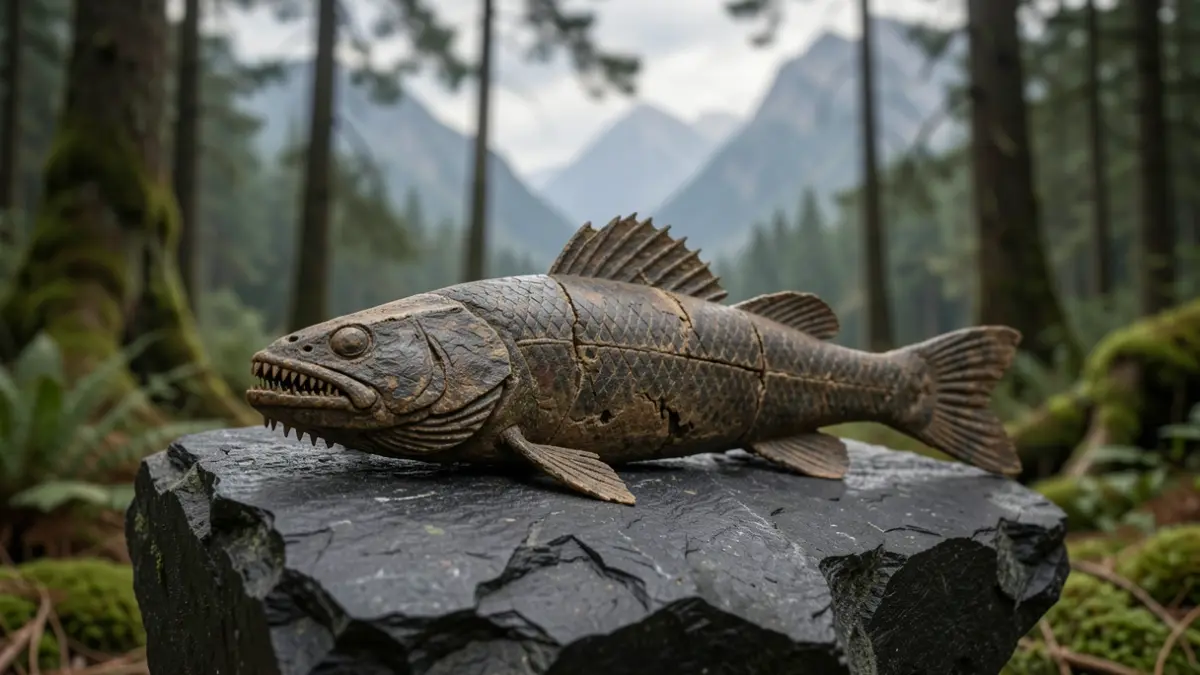
A freshwater fish, Stephaniella melanocephala, belonging to a previously unknown species, has been discovered and identified at Mines Saint-Étienne. This fossil, dating back approximately 300 million years, provides new insights into the evolution of life and highlights the richness of the school's geological collections.
Belonging to the aeduellid family, these freshwater fish measured about 15 cm in adulthood. They lived in an era when the Saint-Étienne basin was a vast area of lakes and marshes, surrounded by primeval forests and high mountains.
The discovery of Stephaniella melanocephala, the first vertebrate described in detail from this basin, offers novel elements on the anatomy of ancient lake fish and aids in better understanding the evolution of species from that period.
This fossil, originating from surveys conducted between the 1950s and 1970s, was stored in a repository. Its identification was made possible by the work of Michel Pouzadoux, the inventory manager for the 'forgotten collections,' and the expertise of Daniel Gonçalves, a paleontology student at the University of Toulouse.
After analysis, the specimen was officially named Stephaniella melanocephala and its discovery published in the international scientific journal Zoological Journal of the Linnean Society in June 2026, with the support of Vincent Luccisano, a paleontologist at the CR2P.
Ségolène Courant, head of collections at Mines Saint-Étienne, described the discovery as 'extraordinary,' emphasizing the new recognition it brings to the collections and the school's reputation.
Over a third of the fossils in the Mines Saint-Étienne collections still await analysis, raising hopes for further discoveries among the diverse paleofauna already observed, including mollusks, bivalves, crustaceans, and insects.