
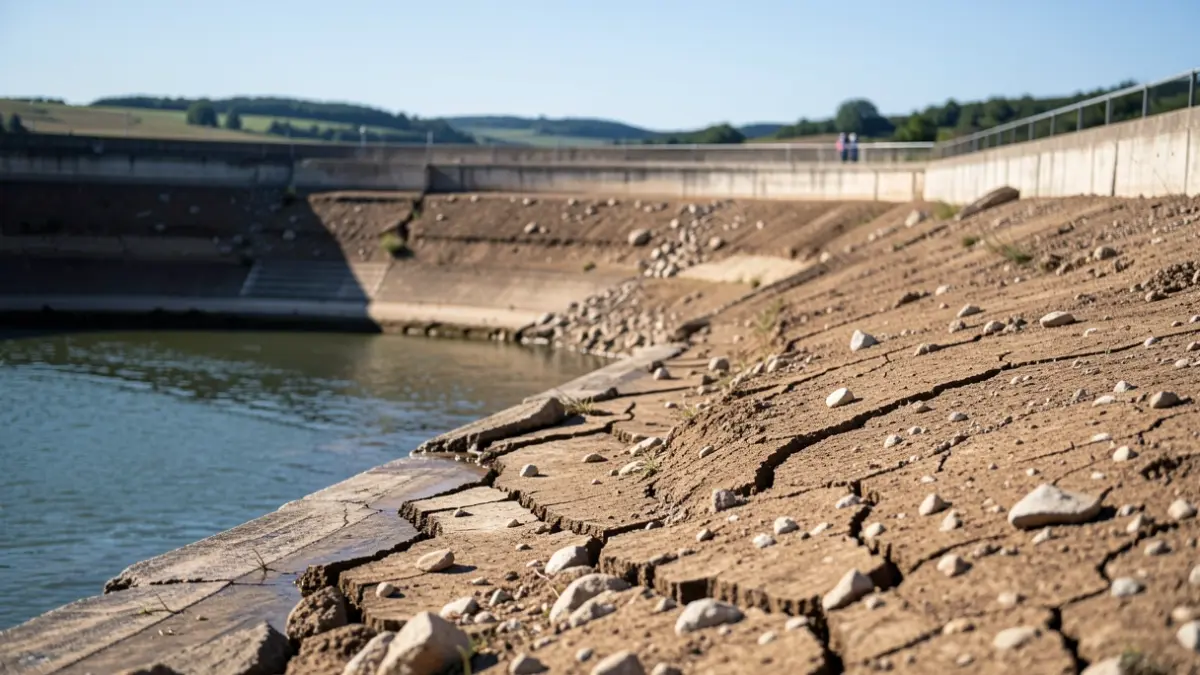
The Lavalette and La Chapelette dams, located in Haute-Loire, supply drinking water to the municipality of La Talaudière and approximately 430,000 inhabitants in the Loire and Haute-Loire departments. On Monday, October 26, their storage capacity was only 12.3 million m³, or 30% of their total capacity, a level considered historically low.
In response to this appeal from Saint-Étienne Métropole, which is asking supplied municipalities to implement water-saving measures, the mayor of La Talaudière, Annie Domenichini, issued a municipal decree on Monday, November 9, to encourage everyone to moderate their consumption.
This measure aims to prevent shortages, as recent rains have not been sufficient to replenish reserves after the drought. Furthermore, safety work on the dams has also reduced their storage capacity. A dry winter and spring, similar to 2023 after the 2022 drought, could lead to a real risk of supply disruption.
The drop in water levels also affects water quality, as water drawn from deeper levels becomes more charged with iron and manganese, complicating its transformation into potable water.
Additionally, the prefect of Haute-Loire issued a decree on Friday, October 30, at the request of Saint-Étienne Métropole, to release 325 liters of water per second into the Lignon river instead of 650. This derogation, lasting a maximum of two months and ending once reserves reach 15 million m³, impacts the aquatic environment and must be as short as possible, hence the need to reduce overall consumption.
The municipal decree invites all residents, shopkeepers, artisans, and businesses to adopt daily eco-responsible practices, such as short showers, controlled toilet flushing, fixing leaks, and limiting washing. It applies from its publication and remains in effect as long as the resource remains fragile.
The sector remains under reinforced alert according to the drought decree from the prefect of the Loire, which imposes strict restrictions on watering, vehicle washing, and swimming pool filling.
Every liter saved is crucial to preserve the resource until spring. For more information on the exact restrictions, the official website VigiEau details the applicable measures.