The MAGNET project (Monge-Ampère Geometry and Numerical Effective Transport for Computational Physics), a recipient of an ERC Synergy Grant 2026, aims to develop novel mathematical and numerical methods for simulating complex physical phenomena. It brings together researchers from the Université Grenoble Alpes (UGA), the Inria Center at Université Paris-Saclay, and the CNRS, with complementary expertise in computer science, numerical geometry, calculus of variations, and theoretical physics.
Led by Bruno Lévy (Inria), Charles Dapogny (CNRS), Roya Mohayaee (CNRS), and Édouard Oudet (UGA), the project addresses the simulation of phenomena involving matter transport or geometric evolution, such as fluid flows, shape optimization, and cosmology. A recurring challenge is balancing precise simulation with reliable tracking of interfaces, which can deform significantly and change topology.
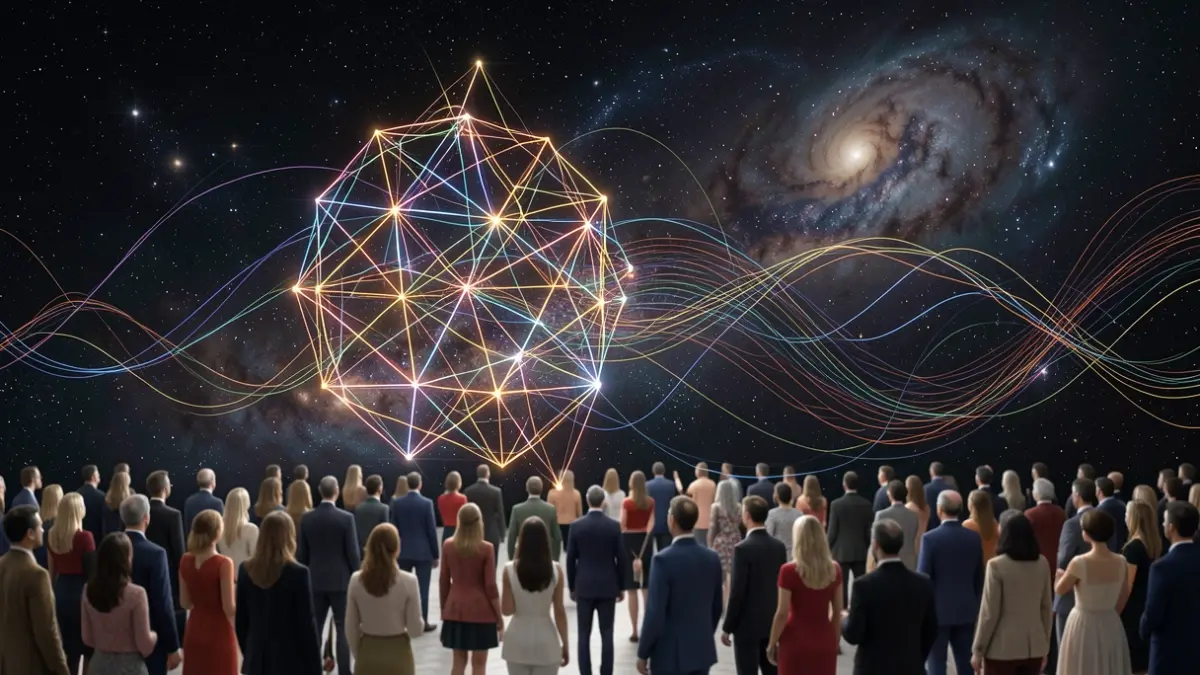
The research draws on optimal transport theory and plans to develop a fast solver for the Monge-Ampère equation. This solver will be released as open-source software, continuing the work of existing libraries like Geogram.
Two key applications are planned: the design of optimal 3D parts for mechanical engineering and shape optimization, and in cosmology, mapping the dark matter of our galaxy using data from the Gaia mission. The developed tools could also find applications in machine learning.
ERC Synergy Grants support ambitious interdisciplinary collaborations. For the 2026 edition, 48 projects were selected from 957 applications, sharing a total budget of 500 million euros. These grants, which can reach 10 million euros over six years, highlight the scientific excellence of the selected teams.