
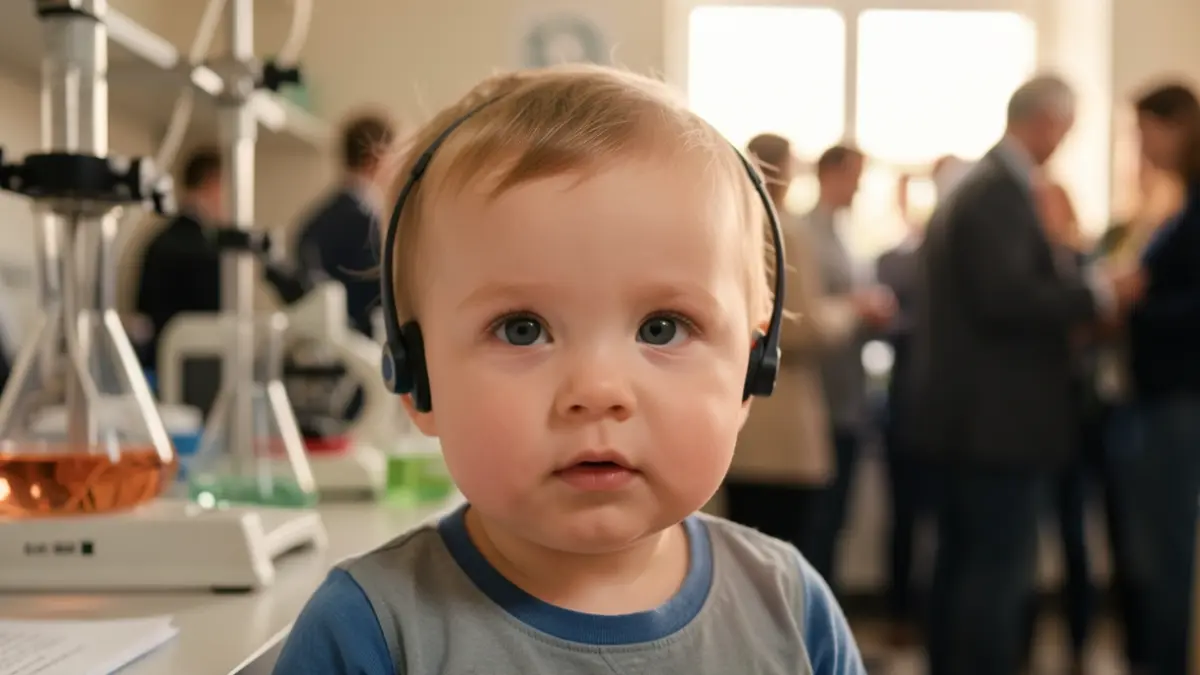
A study published in the journal Current Biology highlights a surprising cognitive ability in infants. Scientists, involving the LPNC and the FEMTO-ST Institute, have shown that from the age of four months, babies already possess a representation of the sound of their own voice.
To reach this conclusion, researchers asked parents to play with their infant, aged four to seven months, for about five minutes. Each baby wore a headset connected to a microphone allowing them to hear their own voice in real time. At times, scientists slightly modified the pitch of the sound to make it higher or lower.
The results show that infants tend to modify their vocalizations in the opposite direction of the heard shift. For example, if their voice sounds higher in the headset, they produce sounds that are slightly lower on average. This compensation mechanism suggests that the baby perceives the heard voice as their own.
This ability appears several months before self-recognition in a mirror, which typically manifests during the second year. By hearing themselves vocalize, infants would learn to associate sounds with the movements that produce them, a learning process playing an important role in speech acquisition.