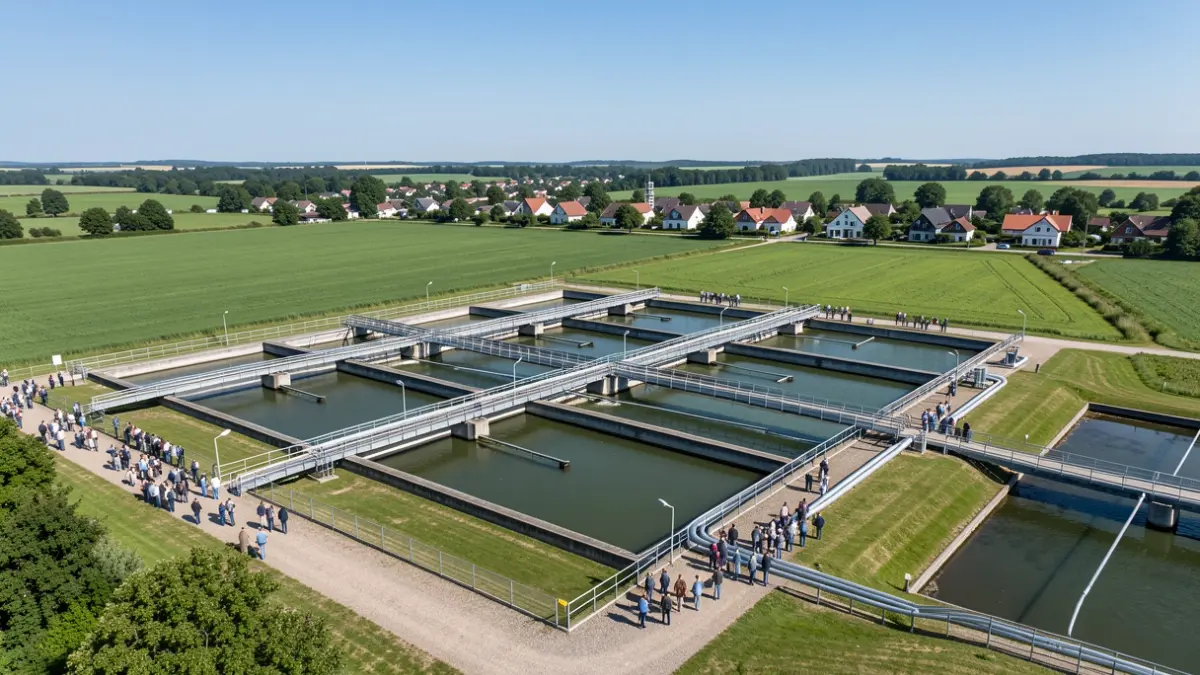
Faced with this necessity, local elected officials are examining two main options: rehabilitating the existing facility or constructing an entirely new station. A feasibility study has been conducted to inform this crucial decision.
Building a new facility would offer the advantage of state-of-the-art technology, being more efficient and durable. This scenario would also ensure complete service continuity, with the current plant remaining operational until the new one is commissioned. However, this path would involve acquiring nearby land and creating new connections to existing networks, leading to a higher investment cost.
Renovating the current station would represent a somewhat less expensive solution. As the site belongs to the municipality of Aurec-sur-Loire, no land acquisition would be necessary. Nevertheless, the existing building is old, and not all equipment could be fully replaced. Managing service continuity during renovation work also appears more complex in this case.
Both options are currently under study, and elected officials will soon need to decide on the preferred direction.
In parallel, various methods for treating water and sludge have been examined. Three approaches are being considered: connection to the existing sanitation network, requiring approximately one kilometer of additional piping; installation of a sludge drying bed; or the creation of a lagoon for sludge treatment by settling.
These detailed studies will help define the most pertinent solution technically, environmentally, and financially, to ensure a high-performing and sustainable service for the future.